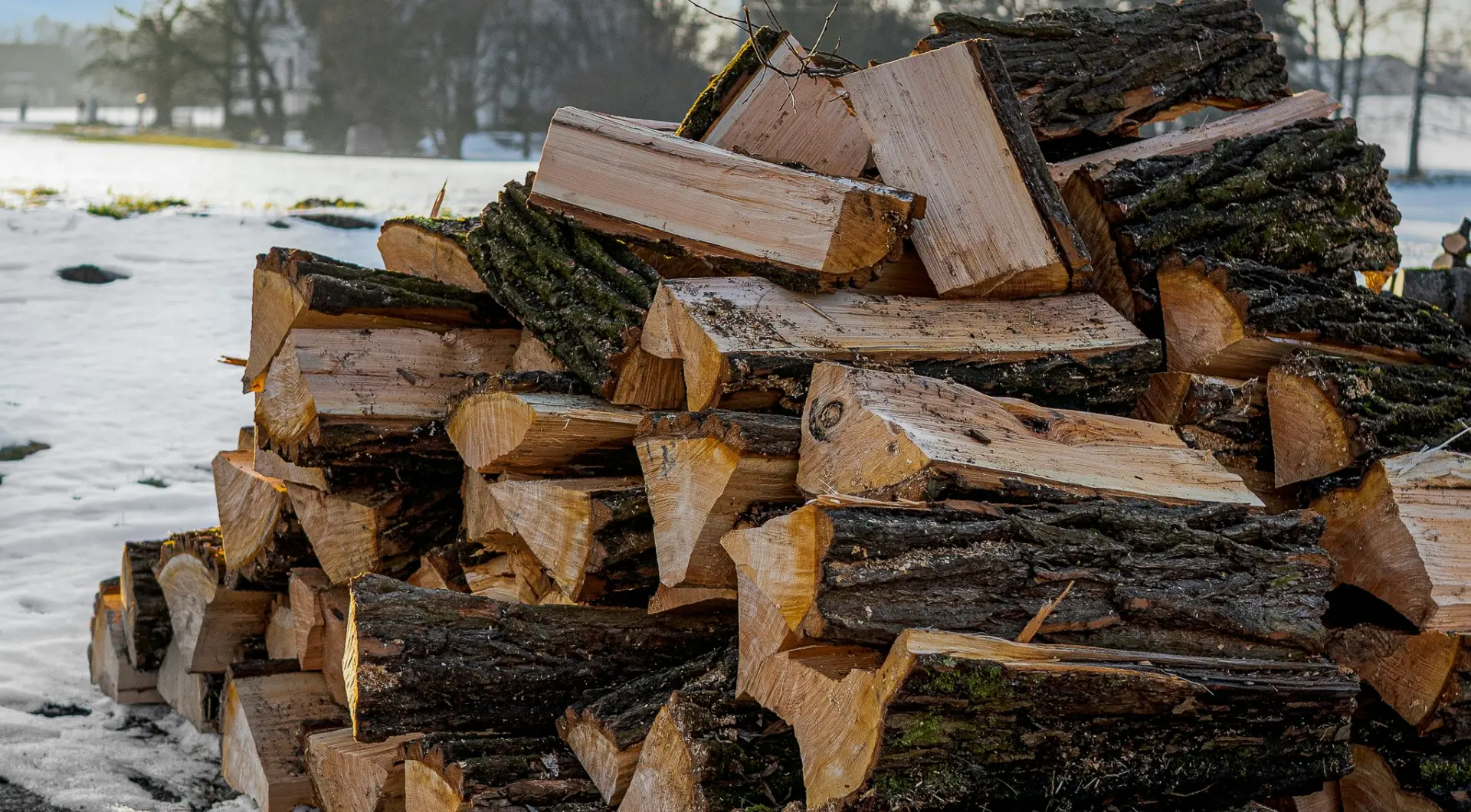
Firewood Suppliers Near NE
Best Firewood Types in Nebraska
Nebraska's firewood supply concentrates along timbered river corridors. The Platte River Valley running across the center of the state has the most established delivery operations, serving Omaha, Lincoln, and Kearney. The Loess Canyons in south-central Nebraska around Broken Bow produce cedar and some hardwood from canyon country. Buyers in the open Sandhills have limited local supply and often pay delivery premiums — many stock up with multiple cords annually to minimize haul costs.
Nebraska's prairie climate and native hardwood stands give you access to some excellent firewood species. While you won't find the maple and beech common to New England, what grows here burns exceptionally well.
Hedge (Osage Orange) is the king of Nebraska firewood. This dense, knotty wood delivers around 32.9 million BTUs per cord — higher than almost any other North American species. It throws intense heat and burns slowly, making it perfect for overnight burns when temperatures drop below zero. The downside? It's tough to split and can spark heavily, so save it for enclosed stoves rather than open fireplaces. Many longtime Nebraskans swear by hedge for the coldest winter nights.
Oak firewood delivery is your best all-around choice. Red and white oak grow throughout eastern Nebraska, delivering 24-28 million BTUs per cord depending on variety. Oak splits cleanly, seasons predictably in 12-18 months, and burns with steady, manageable heat. It's less likely to spark than hedge and produces excellent coals for cooking. If you're new to burning wood, start with oak — it's forgiving and widely available from suppliers across the state.
Walnut offers a middle ground at about 22 million BTUs per cord. It's easier to split than hedge but still delivers solid heat. Black walnut is common in Nebraska river valleys and makes good shoulder-season wood for fall and spring when you don't need maximum heat output.
Mulberry is an underrated option at 25 million BTUs per cord. It seasons faster than oak (often ready in 8-10 months) and splits easily despite its density. The wood smells pleasant when burning and leaves minimal ash. If a supplier offers mulberry, grab it — many folks overlook this excellent firewood.
One pest concern matters here: the Emerald Ash Borer has been detected in eastern Nebraska counties. While ash makes decent firewood (around 20 million BTUs per cord), transporting it helps spread this invasive beetle. If you're buying ash, make absolutely sure it's from your immediate area and the supplier understands quarantine regulations.
Buying Guide & What to Watch For
Let's talk measurements first, because confusion here costs people money every year. A full cord is a legally defined unit: 128 cubic feet of stacked wood, typically arranged as a pile 4 feet high, 4 feet deep, and 8 feet long. That's what suppliers should quote by default.
The face cord vs full cord distinction trips up many buyers. A face cord (sometimes called a rick) is one row of 16-inch logs stacked 4 feet high and 8 feet long — exactly one-third of a full cord. Some sellers quote face cord prices that sound reasonable until you realize you're paying nearly the same per-unit cost as a full cord. Always confirm which measurement you're discussing. When you see listings for a cord of firewood delivered Nebraska, verify whether that's a genuine 128 cubic feet.
Moisture content matters more than species for how wood burns. Freshly cut "green" wood contains 50-60% water by weight. It won't burn efficiently no matter how good the species. Seasoned firewood Nebraska suppliers offer should test at 20% moisture or below — that's the threshold for clean, hot burns.
Here's how to verify seasoning when wood arrives:
- Check the ends: Properly dried wood shows radial cracks extending from the center. The end grain looks dull, not fresh and moist.
- Do the knock test: Bang two pieces together. Dry wood sounds hollow and sharp. Wet wood thuds.
- Look at the bark: On seasoned wood, bark falls off easily or is already gone. Tight, fresh-looking bark suggests recent cutting.
- Inspect the color: Split faces fade from white/yellow to gray/brown as wood dries.
Kiln dried firewood delivery Nebraska is becoming more common. Kiln-dried wood is heated in large ovens to rapidly reduce moisture to 10-15%. The premium (usually 20-30% more) buys you several advantages: you can burn it immediately, it lights faster, and it produces less creosote buildup. For people buying in late fall who need to burn right away, kiln-dried is worth the extra cost. If you're stocking up in spring or summer, air-seasoned wood is fine — it'll finish drying before you need it.
Pricing varies by location and season. Expect to pay more in Omaha and Lincoln than in rural areas. Buying in summer typically costs 15-20% less than scrambling for wood in November. Split firewood delivered runs higher than rounds you cut yourself, but it's ready to burn and saves hours of work.
Nebraska-Specific Considerations
Nebraska's climate swings make firewood management interesting. Eastern counties get 25-30 inches of annual precipitation, while western Nebraska stays much drier. This affects seasoning times — wood dries faster in the Panhandle than near the Missouri River.
Summer humidity can slow seasoning even with good air circulation. Stack wood in single rows with space between pieces, elevate the pile off the ground, and cover only the top. Covering sides traps moisture and invites mold. Most hardwoods need 12-18 months to season properly in Nebraska's climate if you're starting with green wood cut in winter or spring.
Winter cold actually helps the process. Freeze-thaw cycles break down cell walls, and frozen wood doesn't absorb new moisture. Just don't expect much drying to happen December through February.
State and federal regulations prohibit moving firewood long distances. The "buy it where you burn it" rule exists because insects and diseases hitchhike in bark and wood. Don't haul wood from Missouri, Iowa, or Kansas into Nebraska, and don't transport Nebraska wood to campgrounds in other states. The Emerald Ash Borer, thousand cankers disease of walnut, and oak wilt all spread through firewood movement. Responsible suppliers understand these rules and source locally.
Nebraska's agricultural heritage means you'll sometimes see cottonwood and elm offered cheaply. Both are "junk woods" with low BTU output (cottonwood runs about 15 million BTUs per cord). They burn fast and leave you feeding the fire constantly. Unless it's free and you just want ambiance, skip these species.
Finding the Right Supplier
Choosing a firewood supplier isn't complicated, but asking the right questions up front prevents disappointment.
Start with wood type and moisture content. Any professional supplier should answer immediately. If they can't tell you the species or claim "it's all seasoned" without specifics, keep looking. Request the actual moisture meter reading if possible.
Ask about delivery logistics. What's the delivery radius? Do they charge extra beyond a certain distance? This matters in rural areas where the nearest supplier might be 30-40 miles away. Clarify whether firewood delivered and stacked Nebraska includes stacking or if they dump it in your driveway. Stacking service typically adds $50-100 but saves significant time and effort.
Confirm the quantity. Repeat back "That's a full cord — 128 cubic feet of wood" to eliminate confusion. Ask how they'll measure it. Reputable suppliers stack the wood to demonstrate the volume.
Check delivery timing. Some suppliers deliver within days; others book weeks out during peak season. If you're running low and temperatures are dropping, knowing the timeline matters.
Understand payment terms. Many suppliers require payment on delivery. Others take deposits for large orders. Ask about their refund policy if the wood arrives wet or isn't the species promised.
Buying from local suppliers offers real advantages beyond convenience. Local businesses respond faster if there's an issue. They depend on reputation in a defined community, which encourages honest dealings. You're also reducing the cost of firewood delivered by limiting transportation distance, and you're supporting Nebraska's rural economy.
When you order firewood near me through local suppliers, you're typically getting wood cut within 20-30 miles. That's ideal for pest management and ensures you're getting species that actually grow in your region.
The suppliers listed in this directory have been verified for licensing and business standing. You'll find operations from Omaha to the Panhandle, including established names like Big Red Sawmill & Firewood and Heacock Hardwoods. Many offer online ordering, making it simple to arrange bulk firewood delivery before the rush starts.
Browse suppliers by city to find operations near you. Read reviews from other Nebraska customers. Compare what's offered — some specialize in kiln-dried, others in specific species, and several provide firewood delivered to your door with full stacking service. Taking thirty minutes to research now means warm, worry-free fires all winter.

Sarah has 15 years of experience in the firewood industry, specializing in regional sourcing and supplier evaluation across North America.