
Firewood Suppliers Near MA
Best Firewood Types in Massachusetts
When you're shopping for firewood in Massachusetts, you're looking at some of the finest hardwoods in the country. The state's forests produce dense, high-BTU species that burn hot and long — perfect for those January deep freezes.
Oak stands as the gold standard here. Red and white oak dominate Massachusetts forests, and they deliver around 24-28 million BTUs per cord. Oak takes longer to season (18-24 months ideally), but once it's ready, you'll get overnight burns that hold coals until morning. It's the wood to stock deep if you heat primarily with wood. The tight grain means less popping and sparking too, which matters if you have an open hearth.
Maple runs a close second. Sugar maple and red maple both grow abundantly across the state, offering 20-24 million BTUs per cord. Maple seasons faster than oak — often ready in 12-18 months — and it splits beautifully. The burn is clean with minimal smoke, and it produces that classic woodsy smell people associate with New England winters. Many suppliers mix maple with oak to give you immediate burning wood (maple) alongside longer-burning pieces (oak).
Birch deserves mention for its unique qualities. Yellow birch and paper birch both grow here, delivering moderate heat (20-21 million BTUs) but excelling as kindling and shoulder-season wood. Birch bark contains natural oils that help it catch fire even when damp, making it invaluable for starting stubborn fires. The downside? It rots faster in storage than oak or maple, so burn birch within a year of stacking it.
Beech completes the quartet of Massachusetts hardwoods worth burning. It's comparable to maple in BTU output and burns with a steady, even heat. Beech can be tough to split when green, but most suppliers handle that work for you.
One regional concern you need to know about: the Emerald Ash Borer has devastated ash trees across Massachusetts. While ash used to be a firewood staple (easy splitting, good heat), it's increasingly scarce. If a supplier offers ash at a steep discount, understand it may be beetle-killed wood — still fine for burning, but don't transport it far. The Spongy Moth (formerly gypsy moth) has also stressed oak populations in some areas, though this doesn't affect firewood quality once the tree is processed.
Buying Guide & What to Watch For
The biggest scam in the firewood world revolves around measurements. A full cord is a legal unit: 128 cubic feet, typically stacked 4 feet high, 8 feet long, and 4 feet deep. That's what you should expect when someone quotes cord pricing.
The face cord vs full cord confusion trips up countless buyers. A face cord (sometimes called a rick) is one-third of a full cord — a stack 4 feet high and 8 feet long, but only 16 inches deep. Some sellers advertise low face cord prices to look competitive, then don't clearly explain you're getting a third of the wood. Always ask: "Is that price for a full 128-cubic-foot cord?" If they dodge the question, shop elsewhere.
Properly seasoned wood is non-negotiable for clean, efficient burning. You want moisture content below 20%. Here's how to verify it before delivery:
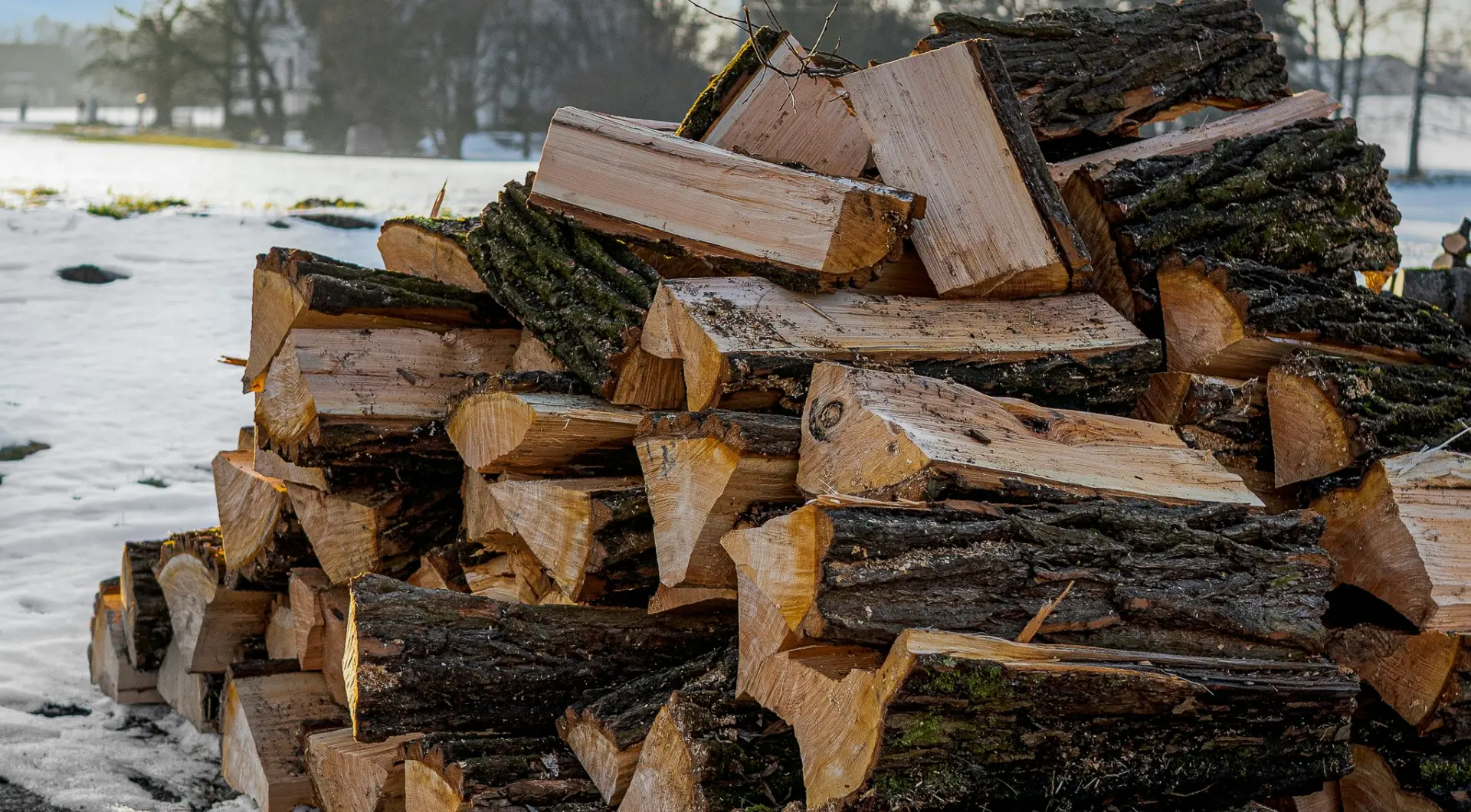
- End checking: Look for radial cracks spreading from the center of cut logs outward. Wood shrinks as it dries, creating these distinctive splits.
- Weight and sound: Seasoned wood feels noticeably lighter than green wood. Bang two pieces together — seasoned wood produces a sharp, hollow crack rather than a dull thud.
- Bark condition: Bark loosens and falls off as wood seasons. If bark still clings tightly across the entire load, it hasn't dried long enough.
- Color: Seasoned wood looks weathered with darkened ends, not bright and freshly cut.
Moisture meters cost $20-30 and remove all guesswork. Split a piece, immediately measure the fresh-exposed interior, and you'll know exactly what you're getting.
Kiln dried firewood delivery Massachusetts suppliers charge premium rates — often 30-50% more than air-dried seasoned firewood Massachusetts. Is it worth it? Sometimes. Kiln-dried wood hits 10-15% moisture content in days rather than months, burns extremely hot with minimal smoke, and carries near-zero pest risk. It's ideal if you're buying mid-season and need wood immediately, or if you have a high-efficiency insert that demands ultra-dry fuel. For open fireplaces and standard wood stoves, properly air-seasoned wood performs nearly as well at better value.
Price expectations vary by region and season. Generally, a cord of firewood delivered Massachusetts costs between $250-400 depending on wood type, delivery distance, and whether it's stacked. Firewood delivered and stacked Massachusetts typically adds $50-100 to the base price, but it saves you hours of backbreaking work. Split firewood delivered runs cheaper than rounds you need to process yourself, but DIY splitting makes sense if you have equipment and enjoy the workout.
Bulk firewood delivery (multiple cords at once) often unlocks discounts of 10-15% per cord. If you have storage space and heat exclusively with wood, buying 3-5 cords in summer saves serious money.
Massachusetts-Specific Considerations
Massachusetts humidity affects firewood seasoning significantly. Coastal areas from Cape Cod through the North Shore experience persistent moisture that extends drying times. Wood stored near the ocean needs extra months to season compared to inland locations. If you live within ten miles of salt water, prioritize covered storage with excellent airflow — think open-sided woodshed rather than tarped pile.
The state's temperature swings help and hurt. Cold winter air holds less moisture, which aids late-stage drying. But spring and summer humidity can rehydrate poorly stored wood. Always stack firewood off the ground (pallets work great) and cover only the top. Covering the sides traps moisture and invites mold.
Massachusetts takes firewood transport regulations seriously because of invasive pests. The general rule: don't move firewood more than 10 miles from where you buy it. This slows the spread of Emerald Ash Borer, Asian Longhorned Beetle, and other destructive insects. When you order firewood near me from local suppliers rather than buying from out-of-state vendors, you're protecting Massachusetts forests while supporting regional businesses.
Supply patterns here favor fall ordering. Many Massachusetts suppliers cut and split during late winter and spring, then season wood through summer. By September, they're sitting on properly dried inventory ready for delivery. Order in October or November and you'll get peak selection. Wait until January and you're competing with everyone whose wood pile ran short, often settling for whatever's left.
Snow complicates delivery logistics. Confirm whether your supplier delivers year-round and whether they charge extra for winter access. Some properties become inaccessible after heavy snow, requiring you to stack wood farther from your home than ideal.
Finding the Right Supplier
Before you commit to any supplier, ask these specific questions:
What's the moisture content, and will you guarantee it? Reputable sellers measure and stand behind their seasoning. If they can't give you a number, that's a red flag.
What species mix am I getting? Some suppliers offer single-species cords; others deliver mixed hardwood. Mixed is often fine (and sometimes preferable for varied burn characteristics), but you should know what you're buying.
Is stacking included, or what does it cost to add? Firewood delivered to your door in a heap works if you're young and energetic. For everyone else, paying for stacking is money well spent.
How far will you deliver, and what's the fee structure? Delivery costs rise with distance. A supplier 30 miles away might charge enough to offset their cheaper per-cord price.
What's your return policy for wet or substandard wood? Good suppliers replace problem loads without argument. Sketchy ones will ghost you.
Buying local firewood delivery makes practical sense beyond supporting your regional economy. Local suppliers understand Massachusetts microclimates — they know that wood seasoned in the Berkshires differs from Cape Cod stock. They navigate your town's roads in winter. They're available if something goes wrong with your order.
The cost of firewood delivered typically includes more than just wood and gas. You're paying for someone's expertise in selecting, processing, and seasoning fuel that burns cleanly and safely. Cutting corners with cheap, questionable sources risks chimney fires, wasted money on wet wood that smolders rather than burns, and frustrating evenings struggling with poor-quality fuel.
Browse verified suppliers throughout Massachusetts who've earned strong customer ratings for quality, reliability, and fair dealing. Whether you need a full cord of wood delivered price quotes or you're comparing kiln dried options, starting with established local businesses means you'll spend winter enjoying your fire rather than fighting it.

Marcus holds a degree in forestry and has consulted with firewood operations and state agencies on sustainable wood fuel practices since 2008.
Statewide Map
Browse by City
Andover
1 suppliers
Ashburnham
1 suppliers
Barnstable
1 suppliers
Billerica
1 suppliers
Bourne
1 suppliers
Carver
1 suppliers
Franklin
1 suppliers
Hamilton
1 suppliers
Hampden
1 suppliers
Huntington
1 suppliers
Monson
1 suppliers
North Andover
1 suppliers
Orleans
1 suppliers
Rutland
1 suppliers
Scituate
1 suppliers
Shelburne Falls
1 suppliers
Spencer
1 suppliers
Springfield
1 suppliers
Uxbridge
2 suppliers
Wales
1 suppliers
Westford
1 suppliers
Westminster
1 suppliers
Whitinsville
1 suppliers
Winchendon
1 suppliers
Top Rated Suppliers
Crossroads Farm Custom Sawing

New England Firewood LLC
ATH Firewood
Levesque Wood Company, Inc.
Holiday Firewood