Firewood Suppliers Near VA
Best Firewood Types in Virginia
Virginia's firewood supply concentrates in the western mountains. The Shenandoah Valley between the Blue Ridge and Allegheny ranges — from Winchester south to Roanoke — has some of the best oak and hickory in the mid-Atlantic, and dozens of established suppliers. The Southwest Highlands around Roanoke, Christiansburg, and Abingdon have long heating seasons and high per-household consumption. The Northern Neck and Eastern Shore have fewer local suppliers and typically rely on deliveries from the Richmond or Hampton Roads areas.
Virginia's hardwood forests give you access to some of the best firewood species in the country. Oak dominates the market here, and for good reason — it delivers around 24-28 million BTUs per cord depending on whether you're burning white or red oak. White oak burns slightly hotter and produces less ash, but both varieties give you those long, steady overnight burns that keep your house warm through February cold snaps.
Hickory is the premium choice if you can find it. At 28 million BTUs per cord, it's the hottest-burning wood commonly available in Virginia. It's harder to split and commands a higher price, but hickory creates excellent coals that hold heat for hours. If you're planning to use your fireplace or wood stove as a primary heat source rather than ambiance, hickory is worth the extra cost.
Maple and cherry both burn well here, though they're mid-tier options. Sugar maple hits around 24 million BTUs per cord — comparable to oak but it lights easier, making it good for shoulder season when you just want to take the chill off. Cherry is lower at 20 million BTUs but produces minimal smoke and smells fantastic, so it's popular for fireplace ambiance and smoking meat.
One Virginia-specific concern: the Emerald Ash Borer has devastated ash tree populations across the state. You'll see dead ash available cheaply, and it's actually decent firewood at 20 million BTUs per cord. Just make sure it's seasoned properly — standing dead doesn't mean dry. The bigger issue is moving firewood around. Virginia has quarantine zones to prevent spreading pests like the Spongy Moth (formerly gypsy moth) and Spotted Lanternfly. Buy locally and burn locally. Don't haul firewood from Fairfax to your cabin in Bath County.
Buying Guide & What to Watch For
The face cord scam is alive and well in Virginia. Here's what you need to know: a full cord is a stack 4 feet high, 4 feet deep, and 8 feet long — that's 128 cubic feet. A face cord (also called a rick) is 4 feet high and 8 feet long, but only as deep as the split pieces — usually 16 inches. That means a face cord is one-third of a full cord. Some sellers advertise a "cord" for suspiciously low prices, then deliver a face cord. Always confirm you're getting a full 128 cubic feet.
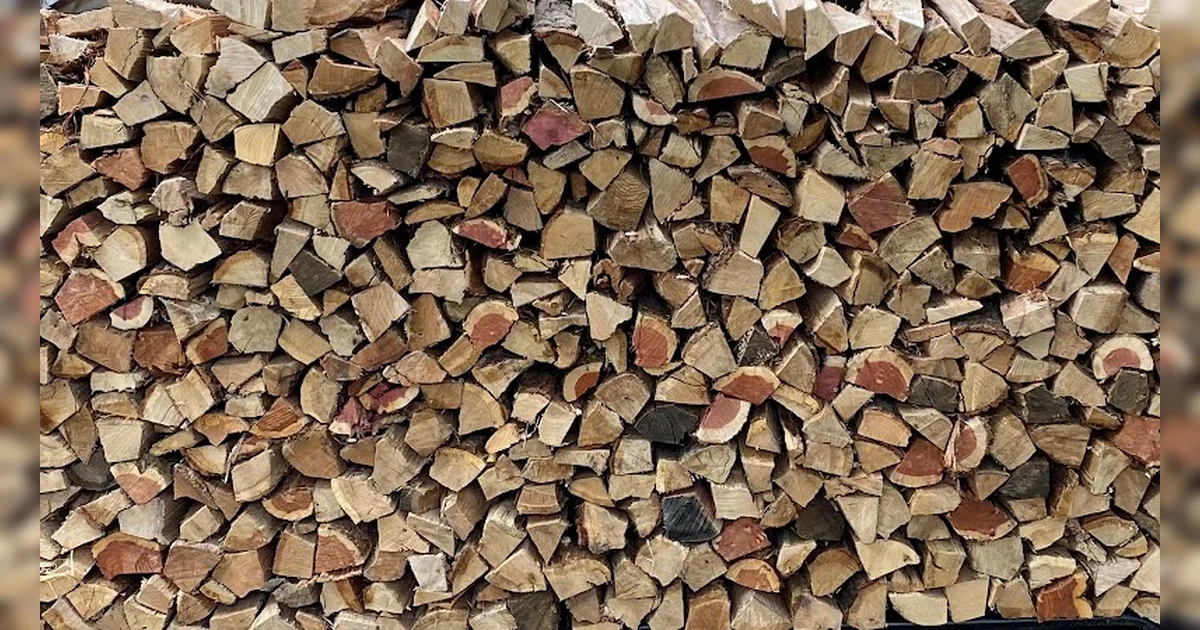
Properly seasoned firewood should have a moisture content below 20%. Ask suppliers if they use a moisture meter — legitimate ones do. You can spot seasoned wood by looking at the ends: they'll have radial cracks (called "checking") and the wood should feel noticeably lighter than fresh-cut. Knock two pieces together — seasoned wood sounds hollow, while wet wood makes a dull thud. If someone delivers wet wood and calls it seasoned, send it back.
Kiln-dried firewood has become popular in Virginia's urban areas, especially around Richmond and Northern Virginia. It's heated in a kiln to drop moisture content to 10-15%, and it's ready to burn immediately. Regular seasoned firewood Virginia suppliers air-dry their wood for 6-12 months. Kiln-dried costs 30-50% more, but it lights faster, produces less creosote, and burns hotter. It's worth paying for if you're buying late in the season and need firewood that works right away, or if you have a high-efficiency EPA-certified stove that demands dry fuel.
Expect to pay more for a cord of firewood delivered in Northern Virginia and the Richmond metro area than you will in rural Southwest Virginia. Population density drives prices. Delivery fees vary based on distance — most suppliers have a range they'll deliver free, then charge $1-2 per mile beyond that. Split firewood delivered is standard; most suppliers will dump it in your driveway. If you want it stacked, expect to pay extra — typically $40-80 depending on the cord count. Firewood delivered and stacked is convenient if you're older or don't have time, but it's not cheap labor.
Virginia-Specific Considerations
Virginia's climate creates interesting seasoning conditions. Eastern Virginia near the Chesapeake Bay stays humid year-round, which slows air-drying. If you're buying from a Tidewater supplier, ask how long they've been seasoning their wood — 12 months is safer than six in that climate. Western Virginia in the mountains has drier air and better airflow, so wood seasons faster. Southwest Virginia suppliers often have better-seasoned hardwood simply because the environment cooperates.
Summer heat actually helps. Wood seasons fastest when it's split, stacked with airflow, and exposed to sun and wind during June through September. Virginia gets hot, humid summers, but that heat drives moisture out if the wood is stacked properly. Top-covered, sides-open stacking works best here.
The state takes firewood transport regulations seriously because of invasive species. Virginia's "Don't Move Firewood" campaign isn't just a suggestion — it's backed by state quarantine orders. Moving firewood from infested areas can spread pests that kill native trees. The practical rule: don't transport firewood more than 50 miles. Buy it where you'll burn it. If you're heading to a state park or campground, buy from suppliers near your destination or purchase bundles on-site.
Supply tends to tighten up from November through January. The best time to order firewood near me (if you're in Virginia) is actually late spring or summer. You'll get better selection, better pricing, and guaranteed dry wood by October. Waiting until the first cold snap in December means you're competing with everyone else who procrastinated, and you might end up with marginal wood at premium prices.
Finding the Right Supplier
When you contact suppliers, ask specific questions. "What's the moisture content?" is question one. If they can't answer or won't use a moisture meter, move on. Ask what species they're selling — "mixed hardwood" is fine if it's oak, hickory, and maple, but not if it's mostly soft maple and poplar. Ask about delivery distance and whether they charge fuel surcharges (some do when gas prices spike). If you want firewood delivered to your door and stacked, get that price upfront in writing.
Find out if they offer kiln dried firewood delivery Virginia suppliers have started providing. Not everyone has kiln capacity, but if you need wood immediately or have a high-efficiency stove, it's worth asking about.
Local matters more with firewood than almost any other product. A supplier 10 miles away can deliver faster, respond to problems easier, and costs less to ship from than someone 60 miles away. You're also supporting Virginia's rural economy — most firewood suppliers are small family operations, not corporations. When you buy local, you're keeping money in your community.
Check if suppliers offer online ordering. About a third of Virginia suppliers now let you order a cord of firewood delivered through their website, which makes comparing options easier. Read reviews, but remember that firewood quality varies by year depending on when wood was cut and how it was stored. A supplier with 4.8 stars across 30 reviews is reliable; one with two 5-star reviews from last month is unproven.
Browse verified local suppliers throughout Virginia to compare species, delivery areas, and pricing. The directory includes suppliers from Marshall to Richmond to Culpeper, with details on what wood types they stock, whether they deliver, and how previous customers rated their service. Finding quality seasoned firewood Virginia suppliers stock starts with knowing what questions to ask and what to look for when the wood arrives. Use the directory to connect with verified local suppliers who'll deliver dry, honest cords that keep you warm all winter.

Sarah has 15 years of experience in the firewood industry, specializing in regional sourcing and supplier evaluation across North America.
Statewide Map
Browse by City
Top Rated Suppliers
Bradshaw Firewood
Woods Tree Farm
Tim Corbin's Firewood Services in VA MD & DC
The Tree Surgeon LLC
Coiner Firewood