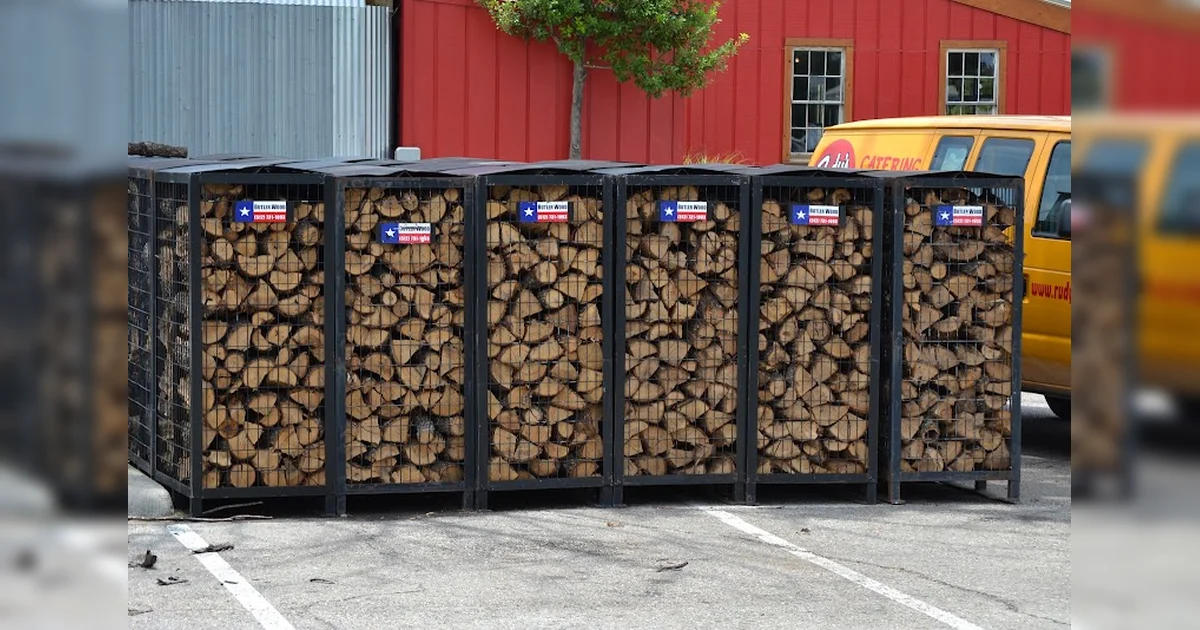
Firewood Suppliers Near TX
Best Firewood Types in Texas
Texas firewood isn't one-size-fits-all, and understanding what's burning in your fireplace makes a real difference. The state's mix of native hardwoods gives you several excellent choices, each with distinct burning characteristics.
Oak is the workhorse of Texas firewood. Red oak and post oak dominate the market, and for good reason—they deliver around 24-28 million BTUs per cord and burn long and steady. Oak takes longer to season (12-18 months minimum), but properly dried oak gives you those reliable overnight burns that keep your home warm without constant tending. If you're buying oak, check for end checking (small cracks) and a hollow sound when you knock two pieces together. These are signs the wood has actually dried.
Mesquite burns hotter than oak—around 28 million BTUs per cord—but it burns faster too. It's dense, heavy, and seasons relatively quickly (6-9 months). Mesquite throws excellent heat and creates minimal ash, making it a favorite for both fireplaces and outdoor fire pits. The wood produces that distinctive sweet smoke people associate with Texas barbecue. If you're planning to use some firewood for smoking meat, mesquite is your go-to, though it can be strong for delicate foods.
Pecan and hickory round out Texas's premium hardwood selection. Both deliver exceptional BTU output (28-30 million per cord) and create wonderful coals for extended warmth. Hickory burns slightly cleaner than mesquite and produces a milder smoke flavor—perfect if you're alternating between heating and cooking. These premium woods typically cost more, but they're worth it if you're heating a large space or want maximum efficiency from each log.
One Texas-specific concern: oak wilt disease affects live oaks and red oaks throughout the state. Reputable suppliers won't sell wood from infected trees, but this is worth asking about. The disease spreads through interconnected root systems and bark beetles, so buying locally-sourced wood that hasn't traveled far reduces risk. Dead, seasoned firewood poses minimal oak wilt risk, but freshly cut oak should stay exactly where it was harvested.
Buying Guide & What to Watch For
The firewood industry has its share of shortcuts and outright scams. Knowing what you're actually buying protects your wallet and ensures you're not stuck with wood that won't burn.
Face cord vs full cord trips up more buyers than anything else. A full cord measures 4 feet high, 4 feet deep, and 8 feet long—128 cubic feet of stacked wood. A face cord (sometimes called a rick) is 4 feet high and 8 feet long, but only as deep as the pieces are cut—usually 16 inches. That means a face cord is roughly one-third of a full cord. Some sellers advertise "cords" at suspiciously low prices, then deliver face cords. Always confirm dimensions in writing before you pay.
When comparing prices for a cord of firewood delivered, you'll see significant variation based on wood type, seasoning method, and delivery distance. Seasoned firewood Texas suppliers typically charge less than kiln-dried options, but kiln-dried is ready to burn immediately. If you're buying in spring or summer, seasoned wood makes sense—it's had time to dry naturally and costs less. If you need wood this week for a cold snap, kiln dried firewood delivery Texas might be worth the premium since properly kiln-dried wood has moisture content below 20% and lights easily.
Moisture content matters more than any other factor. Wet or green wood doesn't just burn poorly—it creates dangerous creosote buildup in your chimney, wastes energy, and fills your house with smoke. Properly seasoned wood should have moisture content at or below 20%. Ask suppliers if they test moisture with a meter. You can buy your own meter for $20-30, and it's worth checking a few pieces from your delivery. Wood that hisses, steams, or struggles to stay lit is too wet, no matter what the seller claimed.
When evaluating cost of firewood delivered, remember that stacking service adds to the price but saves your back. Some Texas suppliers include stacking; others charge extra. If you have mobility issues or a busy schedule, firewood delivered and stacked Texas services are worth budgeting for. A cord of wood delivered price should always include clear details about where the wood gets dumped—in your driveway is standard, but if you need it moved to a side yard or stacked in a shed, expect additional charges.
Texas-Specific Considerations
Texas's size creates dramatically different firewood conditions depending on where you live. East Texas deals with higher humidity, which means wood takes longer to season and stored wood can reabsorb moisture if not properly covered. If you're in Houston, Beaumont, or anywhere near the Gulf Coast, plan on 12-18 months for oak to season properly, and store your wood with excellent airflow—off the ground, with a top cover but open sides.
Central Texas around Austin and San Antonio has more moderate humidity, and wood seasons faster. You'll still want 9-12 months for most hardwoods, but the drier air helps. West Texas and the Panhandle dry wood fastest—sometimes as little as 6-9 months for split oak if you stack it right.
The state's firewood transport regulations exist for good reason. Moving firewood long distances spreads invasive pests and diseases that can devastate forests and urban trees. The Emerald Ash Borer hasn't yet established in Texas, but it's present in neighboring states. Oak wilt, mentioned earlier, spreads partially through firewood movement. Buy local—meaning within your region, not across state lines or even across multiple counties. Most reputable suppliers source wood within 50 miles of where they operate.
Texas's winter heating season is shorter than northern states, but demand spikes hard during cold snaps. February 2021's winter storm proved that even Texas needs reliable firewood supplies when the power grid fails. If you heat primarily with wood, buy your annual supply in spring or summer when prices are lower and availability is better. Waiting until December means you're competing with everyone else who suddenly needs split firewood delivered, and you'll pay premium prices for whatever's left.
Finding the Right Supplier
Not all firewood suppliers operate the same way, and asking the right questions upfront saves frustration later.
Start with wood type and moisture content. Any supplier who can't or won't tell you what species they're selling is suspect. Same goes for moisture content—legitimate operations test their wood and stand behind the results. If someone says "it's seasoned" without specifics, keep looking.
Ask about delivery minimums and fees. Some suppliers only deliver full cords; others will bring half cords but charge a premium or require you to be within a certain radius. Bulk firewood delivery makes sense if you're buying for the whole season, but if you just need a face cord for occasional use, find a supplier who'll accommodate smaller orders without gouging you on delivery cost.
Stacking preferences matter. Will they dump it in your driveway, or can you pay extra to have it stacked? If they stack, where—just wherever is convenient for them, or will they work with you on placement? Some Texas suppliers specialize in full-service delivery, neatly stacking wood in your shed or along your house. Others drop and go. Neither is wrong, but you need to know what you're getting.
Check if they offer online ordering. Many Texas firewood businesses now let you order firewood near me through their websites, with delivery scheduled days or weeks out. This is convenient and gives you time to prepare your storage area.
Finally, ask about their sourcing practices. Where does the wood come from? How long has it been seasoned? Do they kiln-dry? Suppliers who own their land and process their own wood typically provide more consistent quality than brokers who buy from multiple sources.
Local suppliers offer advantages beyond convenience. They understand Texas wood, Texas weather, and Texas regulations. They're accountable to their communities. When you buy local firewood delivery from a regional operation, you're supporting businesses that employ your neighbors and invest back into local economies.
Ready to find suppliers in your area? Browse our directory of verified Texas firewood providers across dozens of cities statewide. You'll find detailed profiles, customer reviews, and direct contact information to get your firewood delivered to your door without the guesswork. Whether you're in a major metro or a rural county, connecting with the right local supplier makes all the difference when the temperature drops and you need reliable heat.

Sarah has 15 years of experience in the firewood industry, specializing in regional sourcing and supplier evaluation across North America.
Statewide Map
Browse by City
Austin
2 suppliers
Dallas
2 suppliers
Euless
1 suppliers
Fort Worth
1 suppliers
Garland
1 suppliers
Gonzales
1 suppliers
Houston
2 suppliers
Katy
2 suppliers
Kountze
1 suppliers
McKinney
1 suppliers
Midlothian
1 suppliers
New Braunfels
1 suppliers
Rosharon
1 suppliers
Royse City
1 suppliers
Seguin
1 suppliers
Sulphur Springs
1 suppliers
Top Rated Suppliers
Sowell & Sons Firewood LLC
Firewood 2 You
Ellis County Fire and Cooking Wood
Big Country Firewood
Indian Head Firewood