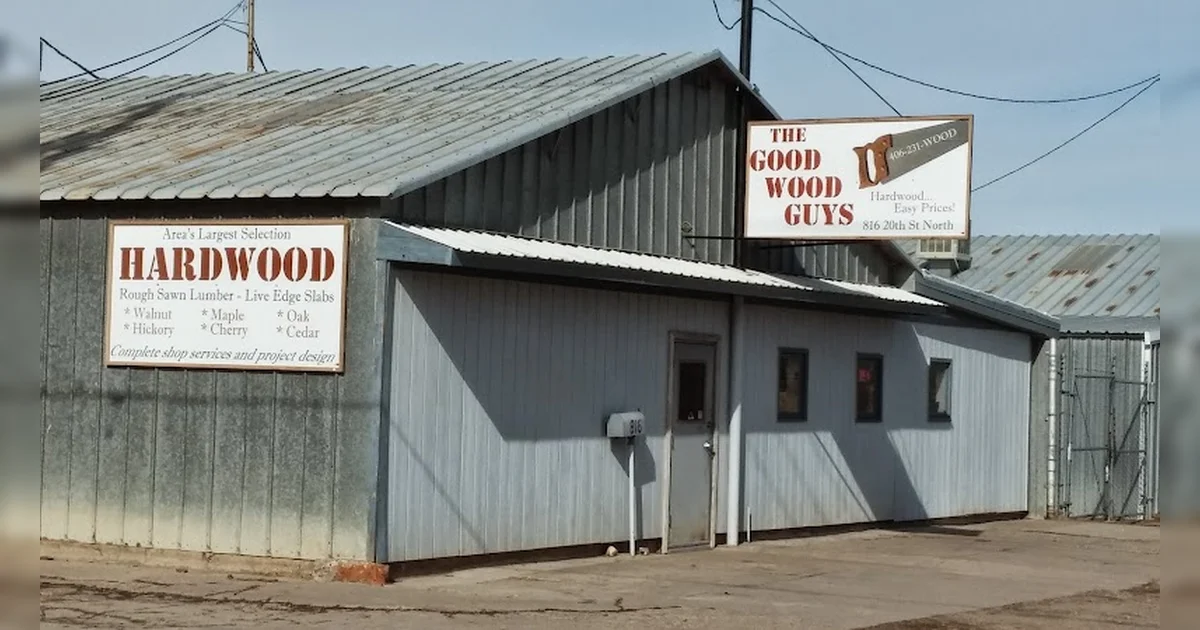
Firewood Suppliers Near MT
Best Firewood Types in Montana
Montana's three main firewood markets are separated by mountain ranges. The Flathead Valley around Kalispell and Whitefish has a large, active market fed by timber from the surrounding national forests. The Bitterroot Valley from Missoula south to Hamilton has dozens of small cord wood operations and is considered one of the best markets for locally-sourced hardwood in the state. The Gallatin Valley around Bozeman is the fastest-growing firewood market in Montana, driven by population growth and cold winters that push many new residents toward supplemental wood heat.
Montana's forests give you several excellent firewood options, each with distinct burning characteristics. Larch (also called tamarack) stands out as the premium choice for heating — it's one of the densest softwoods available, producing around 21 million BTUs per cord. Larch burns hot, leaves minimal creosote, and splits relatively easily when seasoned properly. You'll find it throughout western Montana's mountain forests.
Ponderosa pine and lodgepole pine dominate much of the state, and while they're lower-density woods (around 15-17 million BTUs per cord), they're abundant and affordable. Pine lights quickly, making it ideal for shoulder-season fires or mixing with denser woods. The downside? Pine burns fast and produces more creosote, so you'll want your chimney inspected regularly if it's your primary fuel. Douglas fir sits in the middle — better heat output than pine (around 20 million BTUs per cord) with cleaner burning characteristics.
Aspen grows throughout Montana's riparian areas and makes surprisingly good firewood when properly seasoned. At roughly 18 million BTUs per cord, it won't match larch for heating power, but it splits easily, seasons quickly, and produces a pleasant flame with minimal smoke. Many Montana residents mix aspen with denser woods for balanced fires.
One pest concern you should know about: the mountain pine beetle has affected vast swaths of Montana's lodgepole pine forests. Dead-standing beetle-killed pine can make good firewood if it hasn't been standing too long (wood deteriorates after 3-4 years). Just verify it's still solid and not punky. The good news? Montana hasn't seen significant Emerald Ash Borer establishment yet, though the state monitors for it actively.
Buying Guide & What to Watch For
Let's talk measurements, because this is where confusion — and sometimes outright scams — happen. A full cord measures 4 feet high, 4 feet deep, and 8 feet long (128 cubic feet of stacked wood). When someone offers you a face cord vs full cord, understand that a face cord is typically just one-third of a full cord — a single 16-inch-deep row that's 4 feet by 8 feet. Some sellers use "face cord" honestly, but others use vague language to make you think you're getting more wood than you are.
Always ask: "How many cubic feet of stacked wood am I getting?" For a full cord, the answer should be 128 cubic feet. If they deflect or say "a truckload," that's a red flag. Truck beds vary wildly in size.
Properly seasoned firewood is non-negotiable in Montana's climate. Wood should sit 20% moisture content or below (you can buy a moisture meter for $20-30, and it's worth every penny). Check the ends for radial cracks — that "checking" indicates the wood has dried and shrunk. Knock two pieces together; seasoned wood sounds hollow, while green wood makes a dull thud. The bark should be loose or falling off.
Kiln dried firewood delivery Montana suppliers offer is premium-priced but ready to burn immediately. Kiln-drying forces moisture out in days rather than months, guaranteeing low moisture content. It's worth the premium if you're buying late in the season or need wood immediately. Standard seasoned firewood Montana suppliers sell should be air-dried for 6-12 months depending on species — perfectly fine if you're planning ahead.
Price-wise, expect to pay more in Montana's resort communities (Bozeman, Whitefish, Big Sky) than in rural areas. A cord of firewood delivered Montana typically ranges from moderate to premium prices depending on wood type, delivery distance, and whether it's stacked. That split firewood delivered and stacked Montana service costs extra, but many people find it worth avoiding the labor.
Montana-Specific Considerations
Montana's semi-arid climate actually works in your favor for seasoning firewood. The low humidity means wood dries faster than in humid regions — a huge advantage. Stack your wood in a spot that gets sun and wind, elevated off the ground on pallets or rails. Cover the top but leave the sides open for airflow. Even in Montana's cold winters, properly stacked wood continues drying.
Here's something many new Montana residents don't know: the state has firewood transport regulations designed to prevent the spread of invasive pests. Don't haul firewood from distant areas — buy it locally where you'll burn it. Moving firewood even 50 miles can transport destructive insects like the spruce beetle or various bark beetles that have devastated western forests. When you order firewood near me searches, you're not just finding convenience — you're following best practices for forest health.
Montana's temperature swings matter too. A January cold snap can hit -30°F in parts of the state, meaning you'll burn through wood faster than mild-winter regions. Calculate your needs conservatively. Most Montana homes burning wood as primary heat use 4-6 cords per winter, though well-insulated homes might use less and drafty older homes considerably more.
Wildfire concerns affect supply too. During high fire danger periods, forest service permits for personal cutting may be restricted, tightening commercial supply. Planning ahead — ordering in spring or early summer — usually gets you better prices and more choices.
Finding the Right Supplier
When you're comparing suppliers, ask specific questions. First: "What's the moisture content, and how was it measured?" Reputable suppliers check regularly with meters. If they say "it's been seasoning for a while" without specifics, keep looking.
Second: "What species is this, and where was it sourced?" You want to know if you're getting larch, fir, or pine, and whether it came from nearby forests. Local firewood delivery means shorter transport, fresher relationships, and better accountability if there's a problem.
Third: "What exactly am I getting for the price?" Clarify whether it's a full cord (128 cubic feet), whether it's split, and whether delivery is included. Ask about the cost of firewood delivered if stacking is available — some suppliers offer firewood delivered and stacked Montana service that saves your back.
Fourth: "How far will you deliver?" Bulk firewood delivery usually has distance limits, and delivery cost can add up if you're far from the supplier's base.
Why does buying local matter beyond convenience? Local suppliers depend on community reputation. They're more likely to stand behind their product because they'll see you at the hardware store. They understand regional needs — they know Montana winters. And frankly, keeping money in Montana's rural economies helps the neighbors who live here year-round, not just the folks in resort towns.
The suppliers listed in this directory serve communities throughout Montana, from Gallatin Gateway and Bozeman in the southwest to Kalispell in the northwest, Billings in the south-central, and Missoula in the west. Many offer online ordering, making it simple to arrange a cord of firewood delivered Montana without phone tag.
Look for suppliers with strong ratings — it's the best predictor of a good experience. When someone consistently delivers properly seasoned wood, honest measurements, and reliable service, word gets around. Browse the directory to find seasoned firewood Montana suppliers near you, read their reviews, and reach out with your questions. Most are happy to explain their process, wood sources, and delivery options.
Stocking up now means you're ready when temperatures drop and demand spikes. Montana winters don't wait, and neither should your firewood planning. Find your local supplier, ask the right questions, and you'll stay warm all season with wood that burns clean, hot, and efficiently.

Marcus holds a degree in forestry and has consulted with firewood operations and state agencies on sustainable wood fuel practices since 2008.
Statewide Map
Browse by City
Bigfork
1 suppliers
Billings
2 suppliers
Bozeman
2 suppliers
Clancy
1 suppliers
Cut Bank
1 suppliers
Deer Lodge
1 suppliers
Gallatin Gateway
2 suppliers
Great Falls
1 suppliers
Havre
1 suppliers
Helena
1 suppliers
Kalispell
2 suppliers
Manhattan
1 suppliers
Miles City
1 suppliers
Missoula
2 suppliers
Olney
1 suppliers
Polson
1 suppliers
Roundup
1 suppliers
Seeley Lake
1 suppliers
Stevensville
1 suppliers
Superior
1 suppliers
Toston
1 suppliers
Victor
1 suppliers
Top Rated Suppliers
Aching Axes Firewood and More
Bad Goat Forest Products
Marks Miller Post & Pole Inc.
McCleary Distributing, Inc.
Flathead Father N' Son - Premium Firewood