Firewood Suppliers Near IL
Best Firewood Types in Illinois
Illinois firewood supply concentrates in the forested south. The Shawnee Hills in southern Illinois produce oak and hickory through dozens of small operations. The Illinois River Valley running through the center of the state has good hardwood availability and active local markets in Peoria and Ottawa. The Quad Cities metro along the Mississippi River on the Iowa border is one of the state's busiest delivery markets, with suppliers crossing state lines regularly.
Illinois winters demand firewood that can handle long, cold burns without constant refueling. Oak dominates the market here for good reason — red and white oak both deliver around 24-28 million BTUs per cord, meaning fewer trips to the woodpile at 2 AM when temperatures drop below zero. White oak seasons slower (18-24 months minimum), but its tight grain produces minimal smoke once it's properly dried. Red oak seasons faster (12-18 months) and splits more easily, making it the go-to choice for most Illinois homeowners.
Hickory firewood delivery is worth seeking out if you're serious about heat output. At 28 million BTUs per cord, hickory outperforms even oak, and it creates those beautiful red coals that radiate warmth for hours. The downside? Hickory's density makes it harder to split, and suppliers charge a premium for it. Save hickory for the coldest January nights when you need maximum heat. For everyday burns, oak gives you better value.
Cherry and walnut show up occasionally from Illinois suppliers, though both work better as supplemental woods rather than your primary fuel. Cherry burns cleaner than oak with a pleasant aroma — ideal if you're running a fireplace in your living room and want to avoid smoky smells. Walnut splits easily and seasons quickly, making it excellent kindling or shoulder-season firewood when you don't need all-night burns. Neither produces the BTU output of oak or hickory, so plan accordingly.
One Illinois-specific concern: Emerald Ash Borer has devastated ash tree populations statewide. You'll occasionally find dead ash available as firewood — it's safe to burn and seasons quickly because the beetles kill the tree but don't affect wood quality. The catch? Illinois regulations prohibit moving firewood more than 50 miles from where it's cut, specifically to contain invasive pests like EAB and Spongy Moth (formerly Gypsy Moth). Always buy from local suppliers who source within your region.
Buying Guide & What to Watch For
The face cord scam catches new firewood buyers every year. A full cord measures 128 cubic feet (4 feet high × 4 feet deep × 8 feet long). A face cord — sometimes called a rick — measures only 16 inches deep instead of 4 feet, giving you exactly one-third of a full cord. Unscrupulous sellers advertise "cords" at suspiciously low prices, then deliver face cords and claim that's standard. When you call about seasoned firewood Illinois suppliers, specifically ask: "Is that a full cord — 128 cubic feet?" Get the answer in writing.
Properly seasoned firewood contains 20% moisture or less. Here's how to verify it before you accept delivery: check the ends for deep radial cracks (called checking), knock two pieces together and listen for a hollow sound rather than a dull thud, and look for darkened ends with loose bark. The wood should feel noticeably lighter than green wood. If you're paying for a cord of firewood delivered Illinois and it arrives with tight bark and no end checking, that wood hasn't seasoned long enough.
Kiln-dried firewood costs 30-50% more than air-seasoned, but the premium buys you two advantages: guaranteed moisture content below 20% (often 10-15%), and complete pest elimination since kiln temperatures exceed 130°F. For occasional fireplace users who don't have storage space for a full winter supply, kiln dried firewood delivery Illinois makes sense — you can store smaller quantities indoors without worrying about insects or mold. If you heat primarily with wood and have barn space, air-seasoned saves money.
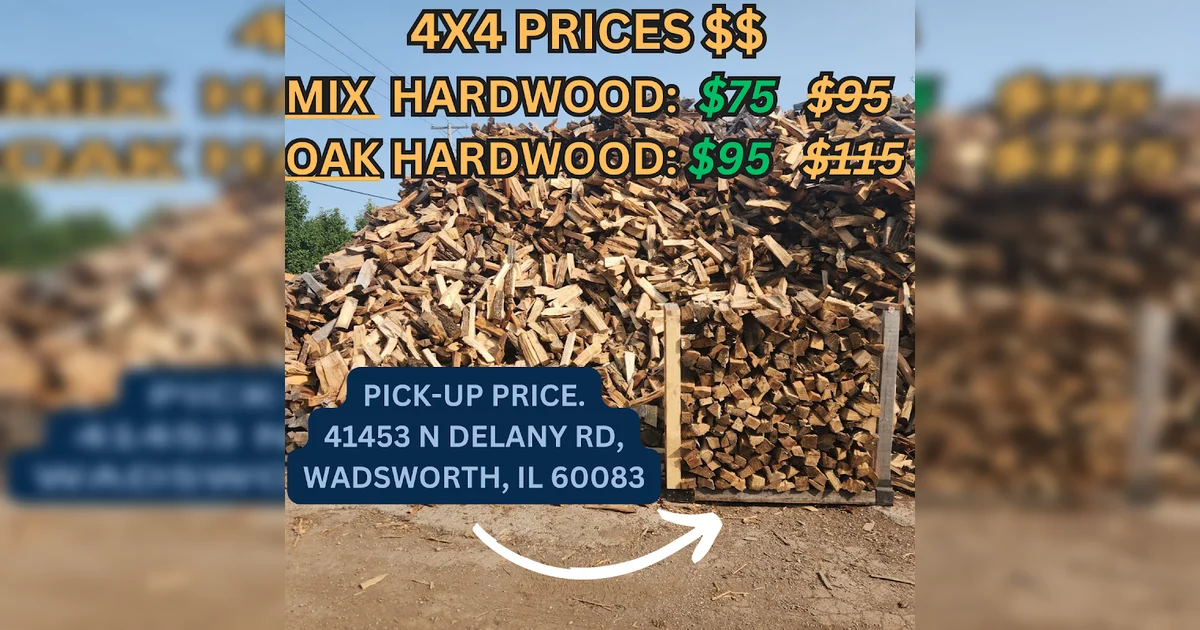
Pricing in Illinois varies by species, delivery distance, and whether you want stacking service. Expect to pay more in Chicago's suburbs than in rural counties — delivery logistics cost more in dense areas. Most suppliers charge extra for firewood delivered and stacked Illinois service, typically $40-75 per cord depending on how far they're hauling wood from the truck. If your woodpile is 100 feet from where the truck parks, that's worth paying for. If it's accessible, save the money and stack it yourself.
Illinois-Specific Considerations
Illinois humidity creates both challenges and advantages for firewood. The state's clay-heavy soil retains moisture, meaning freshly cut wood takes longer to season here than in drier climates. On the flip side, once wood hits 20% moisture, Illinois winters are cold and dry enough to keep it stable. Store your firewood off the ground using pallets or landscape timbers — direct ground contact in Illinois clay will wick moisture back into the wood even after it's fully seasoned.
Cover the top of your woodpile but leave the sides exposed. Illinois gets enough summer rain that an uncovered pile will soak through and start rotting. But covering the sides traps moisture and prevents airflow, which actually slows seasoning. A simple tarp or metal roofing panel across the top protects from precipitation while letting wind circulate through the stack.
Illinois Department of Agriculture regulations on firewood transport exist for a reason — moving infested wood spreads destructive pests faster than natural migration. The "buy local, burn local" rule isn't just environmental advocacy; it's practical pest management. Some campgrounds and forest preserves prohibit bringing outside firewood entirely. Even if you're just moving wood from your northern Illinois property to your house downstate, you risk introducing invasive species to new areas. Dozens of local suppliers operate throughout the region, so there's no reason to transport wood long distances.
Winter delivery scheduling matters in Illinois. Suppliers get slammed in October and November when everyone suddenly remembers they need firewood. Order by early September if possible — you'll get better pricing, guaranteed delivery dates, and first pick of premium species. Some suppliers offer summer discounts because their crews have lighter schedules. A cord of wood delivered price drops 10-20% if you're willing to take delivery in July and let it finish seasoning in your own yard.
Finding the Right Supplier
When you call Illinois firewood suppliers, ask these four questions before discussing price:
What's the moisture content, and do you guarantee it? Any supplier worth your business uses a moisture meter and will commit to 20% or below. If they hem and haw about "well-seasoned" or "dried for a year," they're guessing. You want numbers.
What species do you have available right now? Don't accept generic "hardwood mix" as an answer. Oak? Which variety? Hickory? How much? Knowing exactly what you're getting helps you plan burns and compare suppliers' offerings.
Do you offer stacking, and what's the upcharge? Some suppliers include stacking in their delivery fee; others charge separately. Factor this into your total cost when comparing quotes. Also ask where they'll stack — some drivers refuse to walk more than 50 feet from their truck.
How far out is delivery? A supplier 15 miles away with a two-week wait beats a supplier 60 miles away offering next-day delivery. Shorter delivery distance means fresher wood (less time bouncing around in transit, which knocks off bark and creates debris), and supporting local businesses keeps money in Illinois communities.
Local suppliers understand Illinois wood and Illinois weather. They know oak takes longer to season in humid southern Illinois than in the drier north. They're familiar with which subdivisions have fireplace restrictions and which allow outdoor fire pits. When something goes wrong — wrong species delivered, wood wetter than promised, short on the count — a local supplier can return to make it right without complex logistics.
Split firewood delivered service varies by supplier. Some only deliver rounds (unsplit logs), expecting you to split yourself. Others deliver fully split and ready to burn. If you don't own a log splitter and aren't interested in renting one, confirm the wood comes split before you order. "Semi-split" usually means larger pieces that may need an axe or maul to break down further.
Browse our directory of verified Illinois suppliers to compare options in your area. Each listing shows delivery radius, available species, stacking services, and whether they offer bulk firewood delivery for customers heating primarily with wood. Many suppliers now offer order firewood near me online ordering — you can select species, quantity, and delivery date without playing phone tag. Look for suppliers with recent reviews mentioning accurate counts, actual moisture content, and reliable delivery windows.
Buying firewood doesn't need to be complicated. Find a local supplier who answers your questions directly, delivers what they promise, and charges fair rates for quality wood. Once you've found that supplier, stick with them — they'll remember you're a good customer and often give you first access to premium species when supply is limited.

Sarah has 15 years of experience in the firewood industry, specializing in regional sourcing and supplier evaluation across North America.