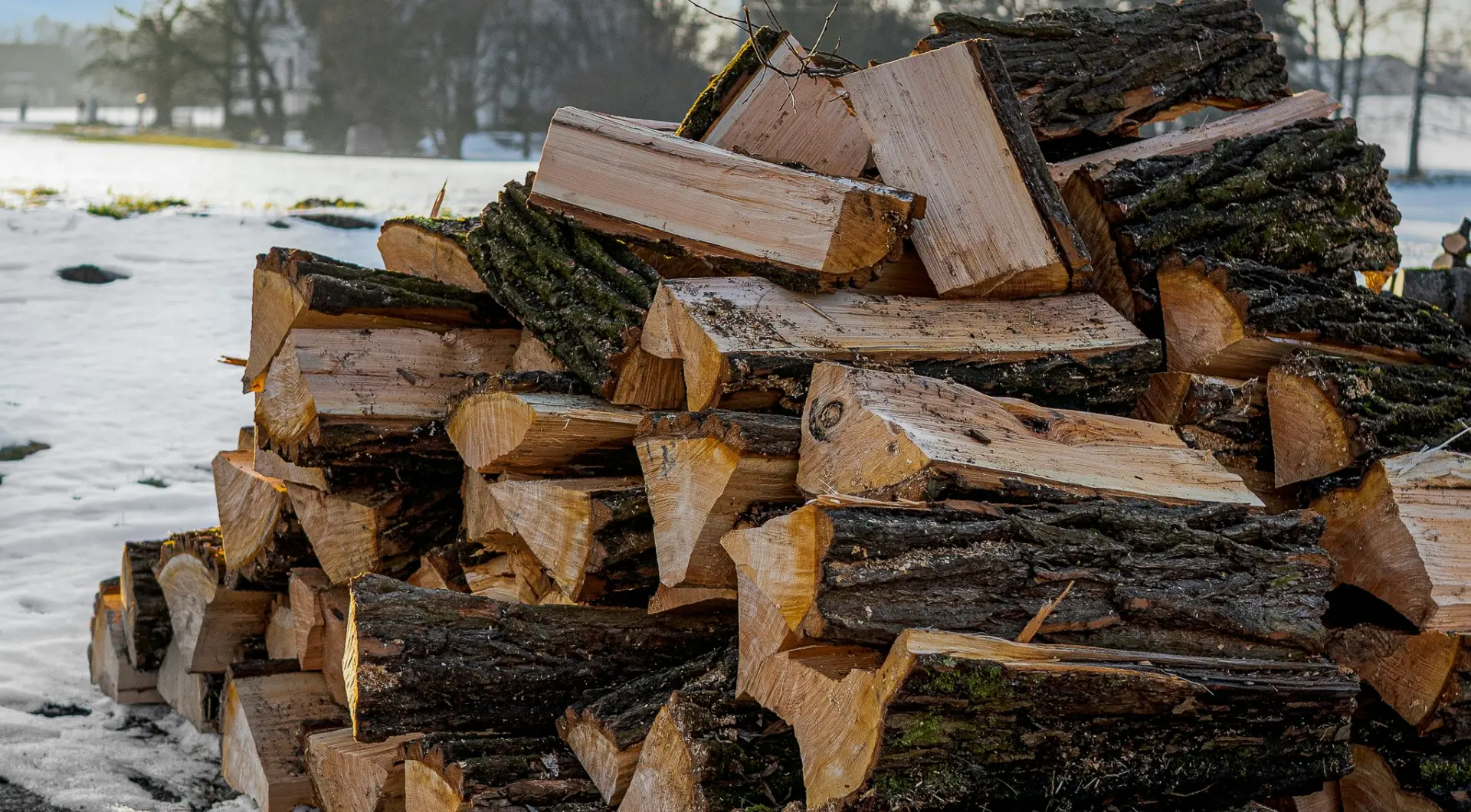
Firewood Suppliers Near WV
Best Firewood Types in West Virginia
When you're stocking up for winter in the Mountain State, you'll want hardwoods that can handle those long, cold nights in the Appalachians. West Virginia's forests give you excellent options, but not all species burn the same.
Oak is your workhorse. Red oak and white oak both deliver around 24-28 million BTUs per cord, meaning you'll get sustained, even heat throughout the night. Oak takes longer to season — plan on 18-24 months if you're air-drying — but once it's ready, you'll have dense coals that hold heat for hours. It's the best choice for overnight burns when temperatures drop below freezing.
Hickory burns even hotter than oak, pushing close to 28 million BTUs per cord. If you've got a smaller firebox or you're heating a well-insulated cabin, hickory gives you maximum heat without constant refueling. The trade-off? It's harder to split and costs a bit more. Hickory also produces excellent coals for cooking, so if you're smoking meat or using a wood-fired oven, this is your species.
Maple sits in the middle — around 24 million BTUs per cord. It's easier to split than oak or hickory, seasons faster (12-18 months), and produces a pleasant, mild aroma. Sugar maple burns cleaner with less creosote buildup, which means less chimney maintenance. It's a solid all-around choice if you're mixing species or want something reliable that won't break your back splitting.
Cherry is more specialty wood. At around 20 million BTUs per cord, it won't heat as long as oak, but it smells incredible and burns with minimal sparking. Use it for ambiance fires or when you've got company over. Cherry seasons relatively fast and splits cleanly, making it popular for shoulder-season burns in fall and spring.
One thing to watch in West Virginia: the Emerald Ash Borer has devastated ash tree populations across the state. While ash used to be excellent firewood (easy to split, burns well even green), you'll find less of it available now. If a supplier offers ash, verify it's been cut from already-dead trees and properly seasoned — don't assume "dead standing" means dry.
The Spongy Moth (formerly gypsy moth) has also impacted oak populations in some counties. Dead oak from moth-killed trees can still make good firewood, but it needs proper seasoning time. Don't buy wood that's been sitting in the forest for years — it may have started rotting.
Buying Guide & What to Watch For
Let's talk measurements, because this is where people get burned (pun intended). A full cord is a stack 4 feet high, 4 feet deep, and 8 feet long — that's 128 cubic feet of wood, bark, and air space. A face cord is only 16 inches deep instead of 4 feet, giving you about a third of a full cord. Some sellers use "face cord" hoping you'll assume it's the same as a full cord. Always ask for dimensions and do the math yourself.
When you're evaluating seasoned firewood West Virginia suppliers offer, here's how to spot properly dried wood:
- Moisture content below 20%: Ask if they use a moisture meter. Reputable suppliers will test and tell you the reading. Anything above 25% will hiss, smoke, and waste your money.
- End checking: Look for cracks radiating from the center of the log ends. This happens as wood dries and contracts.
- Bark falling off: Seasoned wood sheds bark easily. If the bark is tight and fresh-looking, it's probably still green.
- Hollow sound: Knock two pieces together. Dry wood sounds hollow; wet wood thuds.
- Weight: Dry wood is noticeably lighter than green wood of the same species.
Kiln-dried vs seasoned: Kiln-dried firewood delivery West Virginia suppliers provide will have moisture content around 10-15%, versus 15-20% for air-dried. Kiln-dried lights faster, burns hotter, and produces less creosote. It costs 20-40% more, but if you're burning in a newer EPA-certified stove or fireplace insert, it's worth it. For open fireplaces or older stoves, properly air-seasoned wood works fine and saves you money.
Expect to pay anywhere from $200-400 for a cord of firewood delivered in West Virginia, depending on species, seasoning method, and how far the supplier travels. Premium kiln-dried oak will run higher; mixed hardwood that's been air-seasoned for a year will cost less. If someone quotes you $150 for a "cord," confirm dimensions — it's probably a face cord.
Some suppliers offer firewood delivered and stacked West Virginia residents appreciate during winter. Stacking adds $50-100 to delivery cost, but it saves your back and ensures the wood is stored properly right away. If you've got mobility issues or a busy schedule, it's money well spent.
West Virginia-Specific Considerations
West Virginia's climate — humid summers, cold winters, and significant elevation changes — affects how wood seasons. Down in the valleys, higher humidity means wood takes longer to dry. Up in the mountains, you'll get better airflow but harsher winters that shorten your burning season.
If you're buying green wood to season yourself, plan on 18-24 months for oak and hickory, and 12-18 months for maple and cherry. Stack it in a sunny spot with good airflow, off the ground on pallets, and cover only the top. Don't wrap it in tarps — trapped moisture prevents drying.
Don't transport firewood long distances. West Virginia has regulations against moving firewood more than 50 miles to prevent spreading invasive pests like Emerald Ash Borer, Spotted Lanternfly, and Spongy Moth. Buy local firewood delivery suppliers in your county or adjacent counties. If you're bringing wood to a cabin or campsite, source it within the same region.
The state's steep terrain means delivery costs vary widely. A supplier in the Morgantown area might charge $50 to deliver in town but $150 to haul wood up a mountain road in Preston County. Always ask about delivery fees upfront and whether they can access your property. Some suppliers won't deliver up unpaved or steep driveways, especially in winter.
If you heat primarily with wood, calculate needing 4-6 cords per winter for an average-sized home, depending on insulation, stove efficiency, and how cold your area gets. Higher elevations and older homes will burn more. Don't wait until November to order — good suppliers sell out by late October.
Finding the Right Supplier
When you're comparing options for a cord of firewood delivered West Virginia suppliers offer, ask these questions:
- What's the moisture content? They should know and ideally measure it.
- What species am I getting? "Mixed hardwood" is fine, but you should know if it's mostly oak, maple, or something else.
- What are the exact dimensions? Get confirmation you're buying a full cord (128 cubic feet) unless you specifically want less.
- Do you stack, or dump? Dumping is cheaper; stacking costs more but saves you hours of work.
- How far do you deliver? Know the radius and additional fees for longer distances.
- When was this wood cut? You want wood cut at least one year ago for air-dried, or kiln-dried for immediate burning.
Buying from local suppliers matters. You'll get faster delivery, easier communication if something's wrong, and support for your regional economy. A supplier who lives 20 minutes away can bring you an emergency half-cord during a cold snap. Someone two counties over probably can't.
Local suppliers also understand West Virginia's microclimates. Someone selling in Monongahela National Forest territory knows how to season wood in humid conditions. A supplier in the Eastern Panhandle understands the drier climate there. That regional knowledge shows up in wood quality.
When you order firewood near me, you're also reducing the risk of importing pests. Wood transported across state lines or even across regions can carry hitchhiking insects and diseases that devastate local forests. Keeping your purchase local protects West Virginia's woodlands.
Browse our directory of verified suppliers throughout the state. You'll find options offering split firewood delivered, bulk firewood delivery for the whole season, and providers who'll answer your questions honestly. Filter by your county, read reviews from other West Virginia homeowners, and compare what's available. Most suppliers listed offer online ordering or at minimum will give you a straight quote over the phone.
The right firewood — properly seasoned, honestly measured, delivered by someone who stands behind their product — makes all the difference between a warm, cozy winter and a frustrating one spent nursing smoky fires. Take the time to find a good supplier now, and you'll have a reliable source for years to come.

Sarah has 15 years of experience in the firewood industry, specializing in regional sourcing and supplier evaluation across North America.