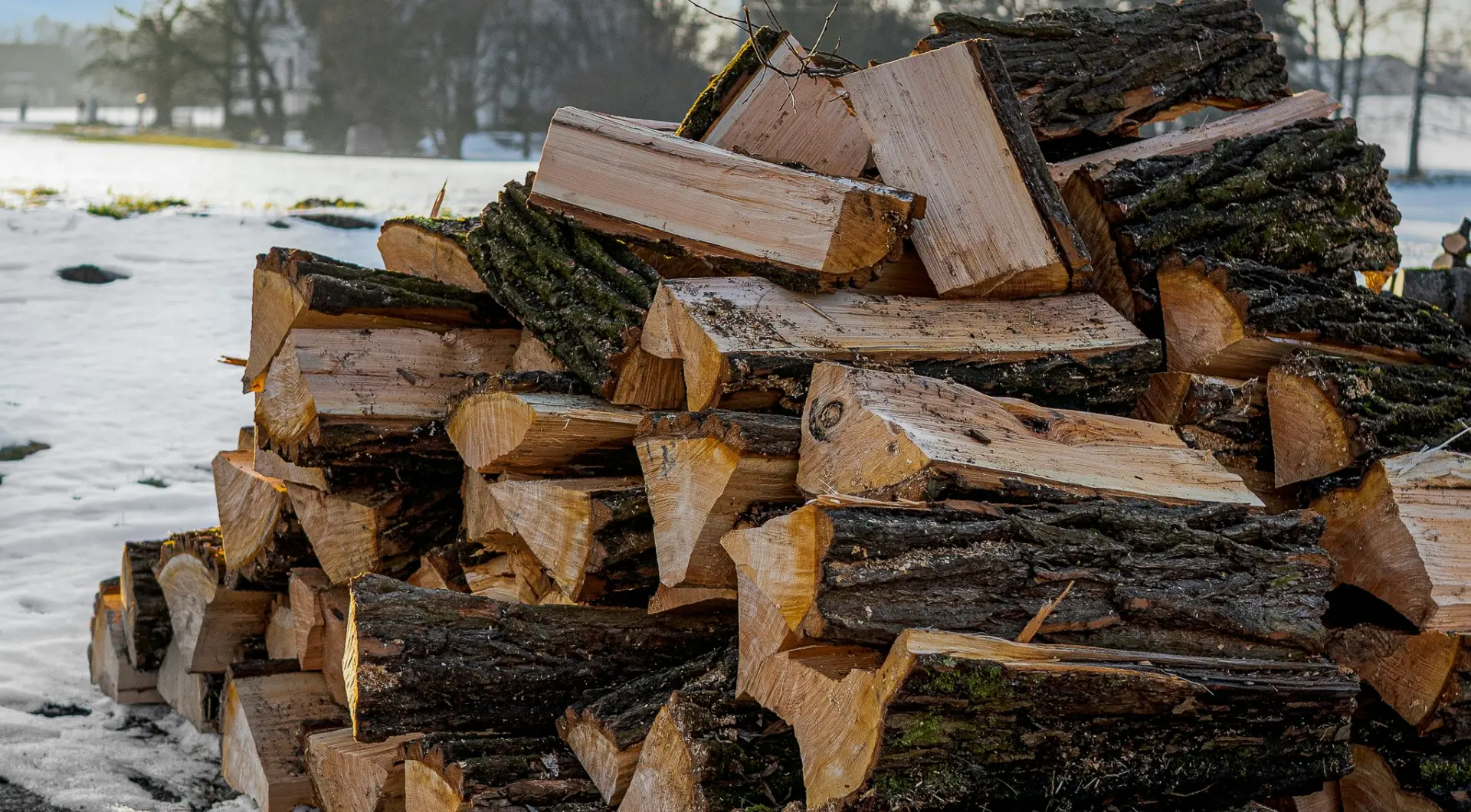
Firewood Suppliers Near SD
Best Firewood Types in South Dakota
When you're stocking up for a South Dakota winter, not all firewood burns the same. The species you choose makes a real difference in how often you'll be loading your stove and how much warmth you'll actually get.
Oak is your premium choice here. It delivers around 24-28 million BTUs per cord and burns slow and steady — exactly what you want when temperatures drop below zero. Red oak is more common than white oak in South Dakota, and while it needs a full year to season properly, it's worth the wait. You'll get longer burns overnight and fewer trips to the woodpile.
Ash has become increasingly available thanks to Emerald Ash Borer management efforts. Before you worry, the beetle doesn't affect the firewood quality — dead ash actually seasons faster than living trees. Ash puts out about 23-25 million BTUs per cord and splits beautifully. It's one of the few woods you can burn relatively green if you're in a pinch, though properly seasoned is always better. The grain structure means less smoke and cleaner glass on your stove door.
Cottonwood grows along every creek and riverbank in South Dakota, which makes it abundant and cheap. Here's the truth: it's not great firewood. At only 13-15 million BTUs per cord, you'll burn through it twice as fast as oak. But it has its place. Cottonwood makes excellent shoulder-season fuel for September and April when you just need to take the chill off. It's also perfect for outdoor fire pits where you want a quick, hot fire that dies down before bedtime.
Pine works for kindling and getting fires started quickly. The resin content means it lights fast and burns hot initially, but it doesn't have the staying power of hardwoods. Use it to get your fire going, then switch to oak or ash for the long haul. Just make sure your chimney gets cleaned regularly — pine deposits more creosote than hardwoods.
For seasoned firewood South Dakota suppliers typically stock oak and ash as their premium options. Cottonwood and pine usually cost 30-40% less per cord, which makes sense given the BTU difference.
Buying Guide & What to Watch For
Let's talk measurements first, because this is where people get burned — literally and financially. A full cord is 128 cubic feet: a stack that's 4 feet high, 4 feet deep, and 8 feet long. That's the legal standard.
A face cord (sometimes called a rick) is only 16 inches deep instead of 4 feet deep. It's one-third of a full cord, but some sellers price it like it's half or more. When you see ads for a cord of firewood delivered South Dakota suppliers offer, confirm whether they mean full cord or face cord. Asking "Is that a full 128 cubic feet?" forces clarity.
Here's how to spot properly seasoned wood when it arrives:
Check the ends. Seasoned wood develops radial cracks (checking) as it dries. Fresh-cut logs have smooth ends. The deeper the cracks, the drier the wood.
Feel the weight. Pick up a piece. Seasoned wood feels noticeably lighter than green wood because you're not carrying all that water weight.
Bang two pieces together. Dry wood makes a sharp, hollow crack. Wet wood thuds.
Look at the bark. On most species, bark loosens and falls off as wood seasons. If the bark is still tight and fresh-looking, that wood was probably cut recently.
Ask for moisture content. Professional suppliers measure with a moisture meter. You want 20% or less for indoor burning. Anything above 25% will smoke excessively and gum up your chimney.
Kiln-dried wood has been force-dried in a heated chamber down to 10-15% moisture. It costs more — usually $100-150 extra per cord — but you can burn it immediately. That premium makes sense if you're buying in December and need heat now. If you're stocking up in spring or summer, save the money and buy seasoned wood that's had 8-12 months of air drying.
Some suppliers offer firewood delivered and stacked South Dakota services for an additional fee. If you're older, injured, or just value your back, it's worth every penny. Stacking a cord yourself takes 60-90 minutes of real work.
Expect to pay anywhere from $200-350 per full cord delivered, depending on species and your distance from the supplier. Oak and kiln dried firewood delivery South Dakota suppliers provide typically hits the higher end of that range. Cottonwood and mixed loads run cheaper.
South Dakota-Specific Considerations
South Dakota's climate actually helps with firewood seasoning. The low humidity and steady winds mean wood dries relatively fast compared to humid regions. Stack your wood in a sunny spot with good airflow, and oak cut in spring will usually be ready by late fall. Cover the top to shed rain and snow, but leave the sides open — you want air circulation, not a sauna.
Winter temperatures here regularly hit -10°F to -20°F, sometimes colder. That means you're burning wood daily from November through March, sometimes into April. A household heating primarily with wood typically needs 4-6 full cords per winter. Homes using wood as backup heat might only need 1-2 cords.
Don't transport firewood more than 50 miles. South Dakota has active management programs for Emerald Ash Borer (confirmed in multiple eastern counties) and the state wants to slow its spread westward. Buying from local firewood delivery suppliers keeps you legal and helps protect South Dakota's tree population. The USDA has a quarantine in several counties, so moving firewood out of those areas without treatment is actually illegal.
If you're in the Black Hills region, be aware that pine beetle-killed trees make decent firewood once dead. Some suppliers sell beetle-kill pine at a discount. It burns fine — the beetles don't affect wood quality for burning purposes.
Finding the Right Supplier
When you're comparing suppliers, ask these specific questions:
What's the actual moisture content? If they can't give you a number, they're not measuring. Professional operations test their wood.
What species is this? "Mixed hardwood" is fine, but you should know if you're getting premium oak or cheaper cottonwood. The price should reflect the wood quality.
How is it measured? Insist on full cord measurements. Ask them to explain how they calculate volume if you're unsure.
What's your delivery area? A cord of wood delivered price usually includes delivery within 20-30 miles. Beyond that, expect surcharges.
Do you stack it? Some suppliers dump it in your driveway. Others stack it neatly. Know which service you're paying for.
When was it cut? Wood cut last week isn't seasoned, no matter what they claim. Wood cut 10 months ago probably is.
Buying local matters more than you might think. When you order firewood near me from a nearby supplier, you're getting wood that's adapted to your climate. Your delivery arrives faster. If there's a problem — say a load that's wetter than promised — a local business is more likely to make it right because their reputation matters in a small market.
Local suppliers also understand regional pricing and availability. They know when ash becomes plentiful after storm damage. They understand that Black Hills customers need different species than eastern South Dakota customers.
For split firewood delivered in manageable 16-inch lengths, most suppliers charge the same rate as unstacked logs — the splitting is just standard service. If someone wants extra for pre-split wood, that's a red flag.
Bulk firewood delivery makes sense if you're heating multiple buildings or buying with neighbors. Some suppliers discount orders of 3+ cords delivered to one location. Even if you can't burn it all this season, properly stacked firewood only gets better with age.
The face cord vs full cord distinction is worth repeating because it's the most common source of confusion. Always calculate the actual cubic feet. A face cord that's 4 feet high and 8 feet long but only 16 inches deep is 42.67 cubic feet — exactly one-third of a full cord. If someone charges $150 for that, you're actually paying $450 per full cord.
When suppliers advertise firewood delivery cost, make sure you understand what's included. Base price, delivery fee, stacking charge (if any), and fuel surcharge should all be clear before you commit.
Oak firewood delivery typically takes 2-4 days to schedule during peak season (October-December). Off-season orders sometimes arrive same-week. If you need heat immediately, specify that you need kiln-dried wood or you'll be stuck burning wet wood and creating creosote problems.
Many South Dakota suppliers now offer firewood delivered to your door with online ordering and credit card payment. It's convenient, but don't skip the step of asking about moisture content and species. A slick website doesn't guarantee quality wood.
Our directory includes verified suppliers throughout the region who've been vetted for reliability, proper measurement, and actual seasoning practices. You'll find operations offering everything from budget cottonwood to premium kiln-dried oak, with transparent pricing and delivery areas clearly marked. Browse suppliers by city to find options near you, check their ratings from other customers, and contact them directly to discuss your specific needs.
Whether you're heating a cabin in the Black Hills or a farmhouse on the prairie, the right firewood supplier makes winter a whole lot more comfortable. Start your search with local options, ask the right questions, and you'll have quality wood stacked and ready before the first snow flies.

Sarah has 15 years of experience in the firewood industry, specializing in regional sourcing and supplier evaluation across North America.